
The Future of Biocontrol with Jan Scherrer
Connecting science, regulation, and farmer adoption
Compiled by Sue B, Media Manager and KRM, GBA and GBL | Interview with Jan Scherrer, CEO at ABIM AG
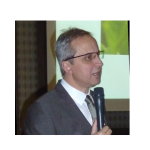
With over 20 years’ management and leadership experience in the pharmaceutical industry – including roles at Pfizer, Aspen Pharma, Otsuka and Vifor Pharma Jan Scherrer recently joined ABIM AG as CEO. He brings in-depth expertise in the areas of strategic and tactical planning, financial and people management, and organizational development. As an ‘Executive Enabler’, his focus is on translating scientific visions into operational reality and scalable structures. Thanks to his academic background in biochemistry at ETH Zurich and his long-standing involvement in committees on environmental protection, he can navigate confidently at the interface between science, governance, politics and operational work in the field of biological pest control.
Q1: You have recently taken on the role of CEO of ABIM. What motivated you to take on this role, and what are your priorities as you begin this new chapter?
After nearly 23 years in the pharmaceutical industry, I felt increasingly drawn to work that combines scientific innovation with tangible environmental impact. Throughout my career, I have been motivated by purpose, and biocontrol offers a unique opportunity to contribute to more sustainable agricultural systems while remaining closely connected to science and innovation. My background in biochemistry, combined with extensive leadership experience in commercial and management roles, as well as my personal interest and commitment to nature conservation and sustainability, made this a natural next step.
As I begin this new chapter with ABIM, my first priority is to listen, learn, and engage with stakeholders across the industry. ABIM has already established itself as the premier global meeting place for the biocontrol sector, and my objective is to build on that strong foundation. I want to help define a clear long-term vision and strategy that reflects the evolving needs of the industry, supports innovation and market access, and continues to create value for participants, partners, and shareholders alike.
Q2: ABIM has become one of the key international meeting points for the biocontrol industry. From your perspective, how has the role of ABIM evolved, and what do you believe the industry needs most from a platform like ABIM today?
Over the past two decades, ABIM has evolved alongside the industry itself. What began as a meeting focused on a relatively niche segment has become the leading international forum for a sector that is now increasingly recognized as an essential component of modern crop protection.
Today, the industry needs more than a conference. It needs a neutral platform that connects innovators, investors, regulators, researchers, manufacturers, distributors, and growers. As biological solutions become more integrated into mainstream agriculture, stakeholders must work together to address common challenges, including regulatory frameworks, farmer adoption, scaling production, market access and evidence generation.
ABIM’s role is to facilitate these conversations, accelerate knowledge exchange, and build confidence in biocontrol solutions. In a rapidly changing market, bringing the right people together is often the catalyst that transforms good ideas into practical impact.
Q3: The theme of ABIM 2026 places a strong focus on moving biocontrol innovation from development to real-world impact. What do you see as the biggest opportunities, and remaining barriers for translating promising innovations into solutions that farmers can adopt at scale?
The opportunities are substantial. Scientific advances in microbial products, biostimulants, RNA-based technologies, precision agriculture and digital decision-support tools are creating new possibilities for managing pests and diseases more sustainably and effectively. I am also seeing growing market demand for solutions that enhance resilience, productivity, and environmental performance simultaneously.
However, innovation alone is not enough. One of the key barriers remains adoption. Even when products are available and effective, farming systems are not always adapted to maximize their performance. Successful biocontrol often requires a system-based approach rather than a simple product substitution. This means new agronomic practices, education, advisory support, and increased confidence among growers.
In addition, regulatory complexity, market fragmentation, and the need for stronger demonstration of economic value continue to slow adoption. Ultimately, biological solutions will achieve mainstream success when farmers view them not only as sustainable alternatives but as tools that improve profitability, resilience, and long-term productivity.
Q4: ABIM 2026 brings together perspectives across the value chain, from innovators and researchers to growers, regulators and policymakers. How important is this cross-sector collaboration in accelerating the adoption of biocontrol solutions?
Cross-sector collaboration is essential. No single stakeholder can drive the transition alone. Researchers generate new knowledge, innovators develop products, regulators establish market pathways, policymakers shape enabling frameworks, and farmers provide the real-world testing ground where technologies either succeed or fail.
One of the strengths of ABIM is that it brings these different perspectives together in the same room. When stakeholders engage in open dialogue, they gain a better understanding of each other’s challenges and opportunities. That often leads to more practical solutions, faster innovation cycles, and stronger alignment across the value chain.
If we want biological solutions to scale globally, we need collaboration that extends far beyond product development. We need shared learning, coordinated action, and a common commitment to transforming agricultural systems.
Q5: Regulation continues to be an important factor in the development of and market access of biological products. What changes or approaches do you believe could help create a more supportive regulatory environment for biocontrol innovation while maintaining high standards for safety and efficacy?
The key principle is proportionality. Biological products often have fundamentally different risk profiles from conventional chemical crop protection products, yet in many regions they are assessed through regulatory systems originally designed for chemicals. This can create unnecessary complexity and delays.
I believe regulatory frameworks should become more tailored to biological products while maintaining rigorous standards for safety and efficacy. Risk assessments should be science-based and proportionate to the nature of the product. At the same time, regulators should consider more efficient review processes and greater international harmonization where appropriate.
The pharmaceutical sector offers useful lessons. In healthcare, accelerated pathways exist when significant societal benefits can be demonstrated. Although agriculture differs from this, the same basic principle applies where innovations tackle key challenges in the areas of sustainability and food security, regulatory systems should enable timely access while ensuring a high level of trust and safety. Furthermore, the biocontrol industry should continue calling for more tailored and proportionate approval procedures which as is the case in the pharmaceutical sector – are based on formal risk-benefit frameworks.
Q6: From your experience at FiBL and now in your leadership role at ABIM, how do you see research, knowledge transfer and industry collaboration contributing to the next phase of growth for biocontrol?
Research remains the foundation of progress. Scientific discovery drives innovation to validate performance and helps us better understand how biological solutions can be integrated into farming systems.
Equally important is knowledge transfer. Many of today’s adoption barriers are not technological but practical. Farmers need access to reliable information, real-world demonstrations, and trusted advisory networks that help them implement biological solutions successfully. The gap between laboratory innovation and field adoption must continue to narrow.
Industry collaboration also plays a crucial role. The complexity of modern agriculture requires partnerships between research organizations, commercial companies, extension services, grower groups, and policymakers. Platforms such as ABIM help create the connections necessary to accelerate learning and bring innovations to market more effectively.
Q7: The biocontrol sector is expanding globally, but market development across regions. Which emerging markets or developments do you believe could have the greatest influence on the industry’s next stage of growth?
Several regions are emerging as important growth drivers. Latin America, particularly Brazil, continues to demonstrate strong momentum due to its large agricultural sector, openness to innovation and increasing adoption of biological crop protection solutions. Asia also represents a major opportunity. Countries such as China and India are investing heavily in agricultural modernization, food security and sustainability. As regulatory frameworks evolve and awareness increase, these markets have significant potential to influence global industry growth.
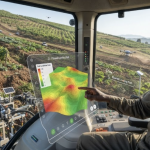
Beyond geography, some of the most important developments are technological. The integration of biologicals with digital agriculture, precision farming, and data-driven decision support will help improve consistency and performance at scale. We are also seeing increasing interest in integrated solutions that combine crop protection, plant health, and soil health into a more holistic production approach.
Q8: Looking beyond ABIM 2026, what would you like to see the biocontrol industry achieve over the next five years, and what role do you hope ABIM can play in helping make that vision a reality?
Five years from now, I would like to see biological solutions firmly established as a mainstream component of crop protection and integrated pest management programs worldwide. The industry should continue to grow significantly, supported by greater farmer trust, clearer regulatory frameworks, and stronger commercial success. Most importantly, growers should choose these solutions because they deliver measurable agronomic and economic benefits in addition to sustainability advantages. I would also like to see increased collaboration across the sector, more efficient paths to market for innovation and stronger evidence demonstrating the value of biocontrol under diverse farming conditions.
BioAg World Digest | Summer 2026


Leave a Reply