
Inside Living Soil and Nature-Based Farming
Balancing natural rhythms with real-world farm business
Compiled by Sue B, Media Manager and KRM, GBA and GBL | Interview with Philippe Cognet, Chief Sales and Strategic Officer at HELLO NATURE
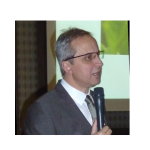
Philippe Cognet is the Chief Sales and Strategic Officer at Hello Nature, a global leader in sustainable Ag Tech solutions. With over 30 years of experience in the international agriculture industry, Philippe has built a reputation as a dynamic leader with a strong commitment to innovation and growth. Before joining Hello Nature, he held senior executive roles across the EMEA region with Kemira Oyj Specialty CropCare, where he was instrumental in expanding business operations and driving strategic development.[cite: 65]
In 2008, inspired by a deep belief that agriculture must evolve toward greener, more nature-based technologies, Philippe joined Hello Nature (formerly Italpollina). He took on the mission of launching and leading the company’s international sales division, playing a key role in the company’s rapid global expansion. Under his leadership, Hello Nature now has a presence in over 80 countries, delivering cutting-edge biotechnological solutions to farmers worldwide. Philippe holds a master’s degree in business and Company Management (Master 2) from Université Catholique de Lyon – ESDES HESTRAD.[cite: 65]
Q1: Having worked across the agricultural inputs sector for more than three decades, how have you seen the role of biological solutions evolve from a complementary input to a more integrated component of modern crop management?
Looking back, I think we have rediscovered something that agriculture understood very well before we became so sophisticated: a plant can never be considered in isolation. It lives in the soil, within a climate, alongside microorganisms, insects, and other plants. And that is precisely what makes Biologicals so interesting: they remind us of this complexity. The real progress is that we now have a common understanding that the evolution of agriculture is no longer about simply replacing one product with another. It is about learning to work with living systems rather than trying to control them completely. Most players in our sector have recognized that the binary approach is fading, and that we are moving from fighting nature towards understanding it a little better.[cite: 65]
Having said that, we still have some way to go. Nature works on long-term cycles, while business and financial plans are generally designed around much shorter horizons. Ideally, we should find a way to better synchronize these two clocks.[cite: 65]
Q2: You joined Hello Nature at a time when the biologicals market was still developing. What were the key scientific, commercial, and market inflection points that shaped the company’s evolution over the past 18 years?
I came from the Ag “Specialty Chemicals” industry before joining Hello Nature 18 years ago, but the owning family’s DNA was already deeply rooted in soil health and a more holistic vision of agriculture including bio-based fertilizers, beneficial microorganisms and natural plant extracts. The real breakthrough came when the company decided to invest in Plant-Stimulating Peptide technology. At the time, this was almost the opposite of what the market was promoting. This first-of-its-kind approach, based on vegetal proteins, was very much a “leap of faith” but it ultimately proved to be a visionary one. It opened up vast fields of discovery: improving plant nutrient efficiency, helping crops recover from abiotic stress, developing a completely new BioChelation technology, and enhancing the performance of chemical fertilizers through combination. And soon, it may potentially open up some very exciting perspectives in Biocontrol.[cite: 65]
But beyond the technologies themselves, it also led us to a broader conviction: the way we look at plant health is increasingly connected to the way we look at human health. It is from this genuine belief that the soil microbiome and the human microbiota are chapters of the same narrative that we launched our new company payoff last year: “Say Hi to a healthier life.”[cite: 65][cite: 66]
Q3: From a global commercial perspective, what determines whether a biological product moves successfully from technical validation to sustained farmer adoption across different geographies and cropping systems?
The beauty of our business is that Biologicals are not like screws manufactured in one place and designed to fit everywhere. They enter a living environment: soils are different, climates are different, crops are different, and farmers’ expectations are different. Universality therefore doesn’t quite make sense in our business. The solutions we develop need to be scientifically robust and consistently validated across geographies, but we are working with parameters that are deeply rooted in local environments. This means that proximity must be valued alongside focus and scale as a strategic top priority.[cite: 66]
The good part for the people involved in this business is that understanding the local relationship between product, crop and place will for a while still make any temptation of commodity or routine approach irrelevant.[cite: 66]
Q4: Biological products can perform differently depending on soil characteristics, climate, crop, genotype, and agronomic practices. How should the industry approach efficacy validation and positioning to ensure consistent and credible outcomes?
A good rule of thumb with Biologicals and one that differs significantly from the chemical mindset is that we should stop being embarrassed by biological variability and start focusing on understanding it. If we plant the same seed in ten different soils, under ten different climates, we should not be surprised if it tells ten slightly different stories and those stories are not necessarily bad ones.[cite: 66]
Companies and R&D teams across our industry are rightly investing in better science, better technologies, better field trials and better data. That is essential. But rather than always trying to make bigger universal claims, we should spend more time explaining why a solution works, how it performs under different conditions, and how our R&D teams are continuously working to make it perform even better in the future. I believe this is one of the strongest sources of credibility and, ultimately, of interest that we can offer.[cite: 66]
And when you consider that around 70% of the world farms are smaller than one hectare, the importance of local knowledge becomes even clearer. We need strong local advisory networks capable of connecting the right biological solution with the right farmer, in the right place and under the right conditions.[cite: 66]
Q5: Where do you see the greatest opportunity for integrating biostimulants, microbial solutions, and other biological inputs into conventional crop protection and nutrition programs rather than treating them as standalone alternatives?
Nature does not act in isolation; it operates through synergies with its surrounding environment. In that sense, the opposition between biological and conventional agriculture is becoming increasingly irrelevant. Nature does not divide things into boxes.[cite: 66]
Over the past years, we have seen that the future of Biostimulants does not lie in standalone applications, but rather in their integration into broader crop-management programs organic, conventional or somewhere in between where they can deliver much greater value. In our own experience, we realized years ago that combining plant-stimulating peptides with beneficial microorganisms, chemical fertilizers or other chemical substances can deliver significantly better outcomes for the crop, the environment, and ultimately for the return on investment of distributors and farmers. The same principle applies across Biologicals more broadly.[cite: 66]
The same logic of synergy is increasingly relevant at company level. Product development, innovation, technical & field validation, regulatory affairs, market positioning- have become so complex that it is increasingly difficult, particularly for smaller companies and start-ups to do everything on their own without missing opportunities. This is why platforms that enable complementary companies to partner, collaborate, and combine their respective strengths can be so valuable.[cite: 66][cite: 67]
Q6: What advances in microbial technologies, fermentation, formulation, metabolomics, plant-microbe interactions or biological discovery do you believe could have the greatest commercial impact on agriculture over the next decade?
I am far from being a technical specialist, so I would be very cautious about predicting the next “miracle technology”. Every decade seems to have one anyway. However, when I see how the introduction of peptide technology has radically transformed the Biostimulants landscape in just a few years and the perspectives it may now open up in Biocontrol, it is hard not to feel enthusiastic. Just think, among a few perspectives, of the role vegetal peptides could play in plant defense: triggering plant immunity, acting directly on pathogens, or being combined with other technologies to create new modes of action. The platform of possibilities is enormous, and there is clearly still so much more to discover. Vegetal peptides are certainly worth a strategic plan for the next 20 years.[cite: 67]
Q7: One of the challenges facing BioAg is translating complex biological mechanisms into clear agronomic value. How can companies strengthen the connection between mode of action, field performance, product claims, and measurable return on investment for farmers?
I would come back to the “proximity” aspect I mentioned earlier. People tend to trust what they understand. That is why we moved early on from input-based selling to outcome-based solutions, investing in field validation at scale multi-country trials, building trust through data rather than claims while continuing to develop strong local ecosystems, including regional production and local technical & marketing support for our partners.[cite: 67]
In some parts of the world if you tell a farmer that a product works by influencing metabolic pathways of his plants/crops, he will politely listen, but it probably won’t mean much to him. It is simply too far removed from his reality. However, if you explain instead that this may well save their crop during a period of extreme heatwaves like those we experienced in Europe this summer, you suddenly have a much more relevant conversation. The same applies when you talk about cost per hectare and final return on investment. It is just a matter of proximity to deliver accessible and tailor-made messages. To put it another way, the best science is science that helps us see things more simply.[cite: 67]
Q8: Regulatory frameworks remain one of the key factors influencing the development of biological agriculture. From your international experience, where do you see the biggest regulatory gaps or inconsistencies, and what would a more science-based and internationally coherent framework look like?
Regulation is definitely a world of its own raising an extraordinary paradox: we wish agriculture to work more closely with nature, and then we create systems that make it unnecessarily difficult to develop technologies based on nature.[cite: 67]
The biggest practical difference is not about the scientific standards, but the speed and predictability of the regulatory pathway. Everybody knows that Europe is rigorous, with lengthy, expensive processes that can take years, while Brazil, for example, is much more pragmatic toward biologicals (especially with its 2024 Bioinputs Law). For companies, this difference is fundamental: regulatory speed directly affects R&D investment, product pipelines, cash flow, and ultimately willingness to innovate.[cite: 67]
There is no doubt that every company in our segment would favor a science-based, risk-proportionate system with fast-track pathways for well-characterized biologicals not lower standards, but faster decisions when the risk is demonstrably low. There are ongoing initiatives in Europe pointing out this direction. They are very welcome and necessary.[cite: 67][cite: 68]
Q9: From a strategic and commercial standpoint, how do you see the BioAg sector evolving as conventional agrochemical, fertilizer, microbial, and biostimulant technologies increasingly converge within integrated crop management systems?
Logically, our BioAg sector should indeed be moving from a collection of product categories towards integrated crop-management solutions. Boundaries between biocontrol, biostimulants, microbial products, nutrition and conventional chemistry are already becoming increasingly blurred at farm level. Farmers are not managing technologies; they are managing crops, risks, and ultimately, an economic equation. So, we will see combinations of various technologies, favoring companies with strong capabilities in formulation, field presence, and application know-how. This should also create further opportunities to boost partnerships between agrochemical, microbial, and biological companies.[cite: 68]
As mentioned earlier, commercial models will progressively move from selling basic products to delivering crop programs with measurable outcomes and the competitive question will shift from “Which product is better?” to “Who can better manage the crop?”[cite: 68]
Q10: As the BioAgTech World Congress & Expo returns to Brazil in 2027, what would you like to see emerge from the Congress in terms of strategic partnerships, technology exchange, market development, and stronger connections between Brazil’s BioAg ecosystem and the international industry?
The BioAg Congress must be seen as a genuine two-way learning experience. Most participants will come to Brazil to share their experiences, technologies and perspectives, but, as we discussed with regulation, Brazil also has a great deal to teach Europe, Africa and Asia about deploying Biologicals at scale.[cite: 68]
I read somewhere that “in Brazil, when an idea is good, it doesn’t stay small for very long.” So, I guess the next BioAgTech World Congress in Brazil will be the perfect place to think Big![cite: 68]
BioAg World Digest | Summer 2026


Leave a Reply