
Precision Infrastructure Forecast
Agriculture sensor market to hit $4.78 billion by 2030
The Business Research Company Projects Strong Hardware and Analytics Consolidation as Asia-Pacific Leads Growth
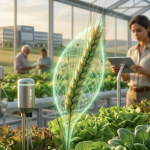
According to a newly released market analysis by The Business Research Company, the global agriculture sensor market to hit $4.78 billion by 2030, scaling up from an evaluated $2.74 billion in 2026. This technical expansion is driven by the widespread implementation of automated irrigation systems, real-time weather tracking, and precise resource-efficiency metrics. While North America maintained the highest regional market share through early precision adoptions, the Asia-Pacific territory is projected to emerge as the fastest-growing market due to rapid regional infrastructure modernization. The industry intelligence highlights that on-field hardware is steadily evolving past basic environmental sensing, transitioning into complex, cloud-linked IoT networks where automated fertilization and real-time analytical platforms directly control agricultural operations.
The agriculture sensor market is expanding as farmers adopt smart farming tools for real-time monitoring, irrigation control and yield improvement. The market is projected to rise from $2.74 billion in 2026 to $4.78 billion by 2030, with North America leading today and Asia-Pacific set to grow fastest.
Why it matters:
- Agriculture sensors are becoming central to precision farming by helping growers monitor soil, weather and crop conditions in real time.
- The technology supports lower input use, better yield management and more sustainable farm operations.
- Rising adoption could reshape irrigation, fertilization and pest-management decisions across major farming regions.
What happened:
The Business Research Company released its Agriculture Sensor Global Market Report 2026, covering market size, operational trends, and a comprehensive 2026-2035 forecast. The report tracks the global market expanding from $2.37 billion in 2025 to $2.74 billion in 2026, on its path to hitting the projected $4.78 billion threshold by 2030. It records North America holding the largest market share in 2025, while identifying Asia-Pacific as the fastest-accelerating regional sector over the forecast horizon.
The details:
- Agriculture sensors measure soil and environmental conditions that matter to farm operations, providing timely data for critical crop management decisions.
- Reported growth drivers include specialized soil and environmental sensors, early precision agriculture adoption, crop-yield monitoring, irrigation management, and resource-efficiency tracking.
- The forecast period points to stronger use of AI-driven crop management systems, connected farm analytics platforms, automated fertilization solutions, and smart farming ecosystems.
- Smart farming techniques are a major demand driver, with sensors deployed for weather forecasting, leaf wetness measurement, trunk-diameter tracking, and pesticide and insecticide management.
- The report says sensors offer easier installation, lower costs, reduced environmental impact, and remote control compared with traditional methods.
- The analysis notes that smart farming could generate up to $11 trillion in global economic benefits, highlighting research from the McKinsey Global Institute.
- The geographic scope covers Asia-Pacific, South East Asia, Western Europe, Eastern Europe, North America, South America, the Middle East, and Africa, introducing updated visual dashboards, infographics, and TAM matrices.
Between the lines & What’s next:
The report points to a market moving from basic sensing toward connected, software-driven farm management. The strongest near-term opportunity appears to be at the intersection of sensor hardware, analytics, and automation. Sustainability is no longer a side benefit; the report frames environmental monitoring as part of the commercial value proposition.
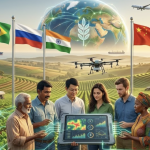
The market is expected to keep compounding through 2030 as farms add more connected monitoring and automation tools. Asia-Pacific’s modernization of agriculture could narrow the gap with North America in market momentum, expanding demand for integrated sensor networks and cloud-linked analytics platforms.
Strategic Market Context
The multi-billion-dollar compounding of on-field sensor infrastructure matches an intensifying drive across agtech to bridge physical field parameters with high-level financial capitalization. As farms transition away from manual data tracking, integrated software layers are transforming hardware readings into immediate unit economic returns. This systemic integration runs parallel with massive strategic capital movements across the global agribusiness sector, such as Anterra Capital securing an €86 million first close for Fund III to scale enterprise vertical AI platforms, and the digital agriculture market projected to climb to $51.3 billion by 2033, cementing IoT and automation as standard operational frameworks for modern agricultural production.
The Business Research Company – Industrial Electronics Division
London, United Kingdom | Global Infrastructure Forecast & Analytics | June 2026


Leave a Reply