
Market Intelligence Outlook
Horticulture Quantum Sensors Market: Global Size & Share Forecast (2026–2036)
Transitioning Toward Autonomous Photon Management and Data-Driven Cultivation
Initial Valuation
USD 0.3 Billion
2036 Projection
USD 1.1 Billion
Growth CAGR
13.9%
The global horticulture quantum sensors market is entering a decade of high-velocity expansion, as agricultural operators shift toward high-efficiency LED environments. According to the latest analysis, the ability to accurately measure Photosynthetically Active Radiation (PAR) has evolved from a research luxury into a commercial necessity for ensuring food security and optimizing resource costs.
Strategic Segment Insights
- Quantum PAR/PPFD Sensors: Commanding a 61.6% market share, these sensors are the primary growth engine for spectral crop calibration.
- Greenhouse Dominance: Currently representing 41.8% of end-use, greenhouse applications remain the largest segment.
- Vertical Farming Acceleration: Rapid growth in indoor farming is stimulating demand for wireless light sensor nodes and spectroradiometers.
Regional Growth & Catalysts
| Country | Projected CAGR | Strategic Catalyst |
|---|---|---|
| India | 16.1% | Smart-farming subsidies and tech expansion. |
| China | 15.2% | Glasshouse automation and domestic manufacturing. |
| U.A.E. | 13.2% | National food security and desert greenhouses. |
| USA | 10.1% | Autonomous CEA and LED retrofitting. |
Precision-First Competitive Model
Market Leaders: Apogee Instruments, LI-COR Biosciences, and METER Group dominate the high-precision research and commercial segments.
OEM Integration: Sensors are increasingly integrated directly into climate control platforms like Priva and Ridder.
Pricing Trends: While spectroradiometers remain premium, fixed monitoring nodes are stabilizing to allow mid-sized adoption.
Future Outlook: Autonomous Photon Management
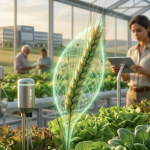
By 2036, the market will transition from basic monitoring to autonomous management. Quantum sensors will act as the “eyes” for AI-driven systems, tuning spectra and intensity in real-time to match plant circadian rhythms and achieve biological perfection in crop output.
Source: Fact.MR Market Analysis (2026–2036)
Contact: S. N. Jha | +1 628-251-1583 | factmr.com

Leave a Reply