
Synthetic Nutrient Crisis & Impact on Soil and Plant Health – Why BioAg Is the Solution?
Feeding a Growing World: A Farmer’s Perspective on the Renaissance of Biological Innovation
By AG Kawamura, Chair, Farmers & Food Chain Forum, GBA
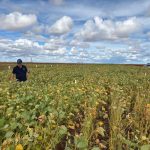
For those of us who are farmers trying to make a living from the land, there is nothing worse than to lose a crop to the weather, to insects or disease, or to aggressive weeds. These are annual battles that we engage in each season. In addition, poor markets, quarantines, retaliatory trade tariffs, and war-time disruptions create more stress and strain on agriculture and the global food system.
Currently, in my own fields in Southern California, we are battling competitive weeds that, if left unchecked, would overgrow our bell peppers and strawberries. I am looking for targeted bio-herbicides and affordable robotic weed cultivation, but for now, I must use expensive—and more importantly, scarce—labor to stay ahead of the aggressive weeds. The cost of manual labor to remove weeds can exceed the cost of rent or water in some cases.
Facing Predictable Crises
In strawberry fields across the region, there has been a significant surge of fruit flies driven by unusually high spring temperatures. We farm in a very urban area, and the need for effective and affordable bio-insecticides has never been greater. Simultaneously, the threat from Invasive Species and biodiversity loss looms large as a predictable global crisis, yet governments are slow to ramp up preventative defenses despite clear documentation and warnings of weakened phytosanitary investment.
In California, we face a duplicative regulatory system that slows the registration process for nationally approved crop tools—both biological and chemical. We end up years behind other states and nations in accessing sustainable technologies at a time when global food security has never been more important—or more vulnerable.
Collaborative Thinking for Complex Challenges
The mounting problems across synthetic fuel and fertilizer markets—exacerbated by international conflicts—require new, collaborative thinking. Global BioAgTech has responded with a unique combination of interactive partnerships, alliances, and team building, embracing a 21st-century approach that combines technology, biology, and innovation to create real-time solutions for fertility, soil health, and crop protection.
A Renaissance in Agriculture
Ancient knowledge, better understood, divulged, and deciphered through the lens of advanced science, plays a vital role as our conceptual framework of life systems expands. Resilient agriculture now depends on the timely sharing of information through institutes of learning, social media, and expanding AI platforms for predictive modeling.
The proof-of-concept introductions of “laboratory-to-field” products are occurring at a mind-boggling pace. The breakthroughs we only dreamed about in my lifetime are now becoming feasible, commercialized, and driving a renaissance of agriculture.
Optimism for a Growing World
Farmers understand that from time to time, we will feel the heartbreak of losing crops to the usual, uncontrollable suspects. It is one of the humbling aspects of agriculture. But there is a renewed sense of optimism driven by actual progress in the exciting world of BioAgTech. These solutions are to be embraced and activated by agriculturists around the world, as they will lead to more reliable food security outcomes during these predictably unpredictable times.
© 2026 BioAg World Digest | Scaling Biological Innovation for Global Food Security


Leave a Reply