
Brazil Leads in Bio-Inputs, But Faces Regulatory Challenges
Latin America’s Biologicals Market Set to Surpass US$3 Billion by 2030 Amidst Rapid Scaling and Fierce Competition
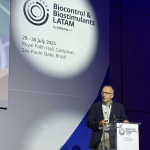
The Latin American agricultural biologicals market is undergoing a period of intense expansion, with Brazil standing as the primary engine of global growth. According to data presented by Mark Trimmer, president of DunhamTrimmer, at the “Biocontrol & Biostimulants LATAM” event, Brazil is responsible for over 20% of global biocontrol growth between 2021 and 2030.
Market Dominance by the Numbers
Brazil’s bio-inputs market currently exceeds US$1.5 billion and is projected to surpass US$3 billion by the end of the decade. Key indicators of this rapid adoption include:
- Scale: Over 50 million hectares of soybean, corn, sugarcane, and cotton utilize biological products, totaling more than 150 million hectares of treated area.
- Registration: More than 600 biocontrol products are registered in Brazil, primarily focused on microbial seed and soil treatments.
- Growth Rate: The Brazilian biocontrol market is growing 7% faster than the global average.
Regional Landscapes: Chile and Argentina
While Brazil leads in commodity crops, other regional players are carving out distinct niches:
- Chile: Focuses on high-value exports like table grapes, fruits, and nuts, utilizing biochemicals such as pheromones and growth regulators.
- Argentina: Experienced 10.9% market growth in 2024 to exceed US$120 million, with a composition of 50% seed treatment, 25% biostimulants, 10% biofertilizers, and 10% biocontrol.
The Challenge of Saturation and Regulation
The number of companies with registered biological products in Brazil surged from 8 in 2014 to 53 in 2024, creating an environment of intense competition and price wars. To survive, Trimmer notes that products must now clearly differentiate through technology, unique formulations, or business models.
Regulatory oversight also remains a critical challenge. Brazil is implementing a new legal framework for bio-inputs, with the Ministry of Agriculture (MAPA) tasked to regulate production standards—including the contentious “on-farm” production sector, which accounts for 15-20% of the market.
Key Factors Driving Latin American Growth
Trimmer identified six primary drivers for the region’s attractiveness to investors: massive market potential, synergistic use of precision ag and AI, new opportunities from global trade tensions, more favorable regulatory policies than the US/Europe, the high pressure of pest resistance, and a proven history of successful large-scale commercialization.
© 2026 BioAg World Digest | Strategic Insight into Global Bio-Input Markets




Leave a Reply