
Global Agroecology Milestone
Over a million Indian farmers moving to natural farming: APCNF wins the 2026 Food Planet Prize
Andhra Pradesh Natural Farming Model Secures $1.5 Million World’s Largest Environmental Award
Andhra Pradesh Community Managed Natural Farming (APCNF) has been awarded the prestigious 2026 Food Planet Prize in Båstad, Sweden, securing $1.5 million for its prominent role in leading one of the world’s most ambitious transitions to chemical-free agriculture. Over the past decade, 1.8 million smallholders in southern India have abandoned synthetic inputs by leveraging women’s self-help groups and a network of 10,000 farmer trainers to master soil-science and nature-positive systems. Winning this global recognition allows the program to build cross-border toolkits, expand research partnerships, and scale these techniques to all 6 million farmers in Andhra Pradesh. Learn more about the structural scaling of this award-winning agricultural transition at APCNF.
STOCKHOLM, June 02, 2026 (GLOBE NEWSWIRE) – Andhra Pradesh Community Managed Natural Farming (APCNF) has been awarded the 2026 Food Planet Prize—the world’s largest environmental award—for its role in leading one of the most ambitious transitions to agroecology ever undertaken[cite: 1]. The prize, worth $1.5m, was presented in Båstad, Sweden, on June 2[cite: 1].
The Curt Bergfors Foundation has announced Andhra Pradesh Community Managed Natural Farming (APCNF) as the winner of the 2026 Food Planet Prize, the world’s largest environmental award. All other finalists—Conscious Kitchen (US), NoPalm Ingredients (NL), and Savanna Institute (US)—received $150,000 in recognition of their work.
WHAT APCNF DOES AND WHY IT MATTERS FOR FOOD SYSTEMS TRANSFORMATION
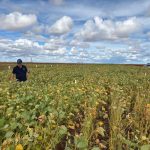
Over the past ten years, 1.8 million farmers in southern India have joined what is now one of the world’s largest transitions to natural agriculture—and the numbers keep growing. Launched by the government of Andhra Pradesh, APCNF works through women’s collectives and a network of over 10,000 farmer trainers to help smallholders abandon synthetic inputs in favor of natural farming practices rooted in soil science and traditional knowledge. Year-round cover cropping and pre-monsoon dry sowing are among the methods being adopted across more than 8,000 villages.
WHAT THE PRIZE WILL UNLOCK
Winning the Prize will let APCNF go even further:
- More demonstration sites for visitors from India and beyond—to show the world what community-managed natural farming actually looks like;
- Country-by-country toolkits for large-scale, locally adapted implementation;
- New research partnerships to keep building the evidence base;
- A natural farming leadership course;
- More support for “farmer scientists”—smallholders trained at an academy to design and document their own field experiments, treating the farmers as legitimate leaders and the farms as sites of agricultural research.
“APCNF demonstrates how nature-positive farming can be implemented across entire communities and regions, providing a scalable pathway for millions of farmers while simultaneously improving livelihoods, resilience, and environmental outcomes. While transforming the way food is produced, APCNF has realized measurable reductions in dependence on synthetic agricultural inputs and enhanced resilience to climate shocks, droughts, and economic volatility. Essentially, APCNF shows how the future of agriculture can be built by working with nature rather than against it.” – Professor Lindiwe Majele Sibanda, co-chair of the Food Planet Prize jury.
“APCNF is honored to receive the 2026 Food Planet Prize on behalf of 1.8 million farm families, 700,000 farmworker families, and the 340,000 women’s self-help groups driving this transformation. We accept this Award for farmers across India who are showing the world a climate-resilient, nature-positive pathway, and we thank the scientists. A special thanks to Honorable Chief Minister Sri Nara Chandrababu Naidu whose vision made it possible. This recognition strengthens our resolve to scale natural farming to all 6 million farmers of Andhra Pradesh.” – Vijay Kumar Thallam, APCNF Executive Vice Chairman.
Strategic Market Context
The macro-scale transition validated by APCNF’s Food Planet Prize win matches a prominent shift away from input dependency toward ecological self-reliance across international agriculture markets. As structural production vulnerabilities and soil degradation compound globally, organizations are redesigning corporate and community frameworks to secure sustainable supply lanes. This trend is active across regional leadership strategies, including the South African Bioproducts Organisation naming Debbie Matteucci as CEO to establish integrated biological production platforms, and Andermatt Group transitions under its first external Chairman to optimize global biological crop protection networks.
Andhra Pradesh Community Managed Natural Farming (APCNF)
Andhra Pradesh, India | Global Agroecology Secretariat | June 2026 | apcnf.in




Leave a Reply