
Global Landscape Evolution of Precision AgTech
Precision AgTech 2026: Mapping the Technologies Transforming Agriculture to Sustainable Farming
By Global BAW Digest Team
INTRODUCTION: WHY PRECISION FARMING MATTERS
Farming is changing, but one thing has not: no two fields behave exactly the same. Soil, water, weather, pests and crop growth can all vary within the same farm. Precision AgTech is helping farmers see those differences and respond to them instead of treating every acre in the same way.
Around the world, the tools are different, but the goal is similar. Satellite images, drones, sensors, AI, smart irrigation, robotics and precision application systems are helping farmers make better decisions, use inputs more carefully and act earlier when something goes wrrong.
This article looks at 12 key Precision AgTech categories and how they are being used across North America, Europe, Latin America, Asia-Pacific, Australia, Africa and the Middle East. It also looks at what is changing next and what still needs to improve before these technologies become easier and more practical for more farmers.
EVERY FIELD IS DIFFERENT
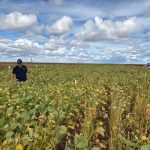
A field can change dramatically within a few meters. Low areas may stay wet, sandy patches may dry quickly, and weeds or crop stress can appear in small pockets rather than across the whole field. For years, large fields were often managed as one unit, with the same seed rate, fertiliser programme and crop protection applied across the whole area. Precision agriculture challenges that approach by recognising and managing field-level differences. Its basic idea is simple: use the right input, at the right rate, in the right place and at the right time. Today, GPS and yield monitors are being joined by satellite imagery, drones, sensors, AI, robotics and biological diagnostics.
This matters as farmers face water limits, changing weather, soil degradation and rising input costs. Precision AgTech is not about replacing farmer experience; it is about giving that experience better information and more precise tools.
The key question is changing from “How much should I apply?” to “What does this part of the field need and when?”
12 TECHNOLOGIES CHANGING FARMING
The technologies below follow the farming cycle: planning and soil preparation; planting; in-season crop care; and harvest, verification and regeneration.
1. Precision Biological Application Applying Biologicals Precisely
- What it covers: Applying biological products at the right rate, place and time including inoculants, bioprotectants and targeted field applications.
- In practice: Biological products can contain living organisms that are sensitive to sunlight, drying and rough handling. In-furrow systems, low-pressure injection and controlled dosing can place them closer to the seed or target area, reducing unnecessary application.
- Key technologies: Variable-rate technology (VRT), GPS/GNSS application, prescription maps, smart sprayers, PWM, drone spraying and targeted micro-dosing.
2. Soil & Microbiome Intelligence Understanding Soil
- What it covers: Understanding how soil biology changes across a field and over time, including microbial activity, soil health and biological variation.
- In practice: Traditional soil tests mainly give periodic chemical information. Newer tools add soil texture, salinity and microbial information, helping farmers identify areas with different fertility, water-holding capacity or biological activity before planting.
- Key technologies: Soil nutrient sensors, EC mapping, soil spectroscopy, NIR/MIR spectroscopy, DNA or metagenomic sequencing and geospatial soil-health mapping.
3. Precision Nutrient & Biostimulant Management Smarter Crop Nutrition
- What it covers: Matching nutrient and biostimulant applications to crop needs, soil zones and growth stages.
- In practice: Nutrient demand changes during the season. Combining soil data, crop imagery and plant measurements can support variable-rate fertilisation and more targeted use of nutrients, biostimulants and microbial products.
- Key technologies: Variable-rate fertilisation, fertigation automation, nutrient sensors, crop nutrient modelling, prescription engines and AI-based nutrient recommendations.
4. Crop & Plant Health Intelligence Keeping Crops Healthy
- What it covers: Finding crop stress, disease and changes in plant health early enough to take action.
- In practice: Images from tractors, drones and satellites can reveal changes in crop condition before they are obvious from the ground. Earlier detection can help growers investigate problems sooner and target treatments where they are actually needed.
- Key technologies: Multispectral and hyperspectral imaging, RGB cameras, computer vision, AI/ML diagnostics, thermal imaging and plant-stress detection.
5. Biological Pest & Disease Management Managing Pests and Diseases
- What it covers: Monitoring pests and diseases and applying biological controls where and when they are most needed.
- In practice: Smart traps and field sensors can track insect populations and disease risk. Weather and leaf-wetness data can help identify conditions that favour disease, allowing biological controls to be used more selectively.
- Key technologies: Smart pheromone traps, automated insect monitoring, computer-vision pest detection, spore traps, disease forecasting and precision biopesticide use. Together, these tools can provide earlier warnings, more accurate targeting and better-timed crop protection decisions.
6. Remote Sensing & Field Intelligence Seeing the Field from Above
- What it covers: Using aerial and satellite information to spot field variability, crop differences and areas that may need intervention.
- In practice: Satellite and drone imagery provide a wider view of crop growth, drainage, erosion and field condition. These layers can be combined into management zones for more informed planting, nutrient, irrigation and crop-care decisions.
- Key technologies: Satellite imagery, multispectral and hyperspectral sensing, UAV/drone imaging, LiDAR, NDVI/NDRE/EVI, GIS and digital field mapping.
7. AI & Decision-Support Platforms AI for Better Farm Decisions
- What it covers: Turning biological, environmental and farm data into practical recommendations for growers.
- In practice: Farms generate large amounts of information from weather, soil, imagery, machinery and yield records. AI and farm-management systems bring these layers together to support planning, prescription maps and clear next steps.
- Key technologies: AI/ML models, predictive analytics, digital twins, agronomic recommendation engines, crop models, cloud farm-management platforms and prescription-map generation.
8. IoT & In-Field Sensing Sensors in the Field
- What it covers: Continuously measuring soil, weather, crop and biological conditions so decisions reflect what is happening in the field now.
- In practice: Connected sensors can track soil moisture, temperature, weather, canopy conditions and pest activity. The value comes when those measurements change a decision, such as when to irrigate, spray or inspect a crop.
- Key technologies: Wireless soil sensors, IoT gateways, LoRaWAN, cellular/5G, soil-moisture and nutrient sensors, weather stations, canopy sensors and connected traps.
9. Precision Irrigation & Biological Optimization Smarter Water Use
- What it covers: Managing water more precisely while creating better conditions for crop growth and biological performance.
- In practice: Variable-rate and subsurface irrigation can give different parts of a field different amounts of water and deliver soluble inputs closer to the root zone. Soil and weather data help avoid both water stress and overwatering.
- Key technologies: Soil-moisture sensing, tensiometers, ET-based irrigation, automated valves, VRI, fertigation controllers, root-zone sensing and AI irrigation scheduling.
10. Autonomous & Robotic Agriculture Robots on the Farm
- What it covers: Using machines that can sense, decide and carry out precision field tasks with less human intervention.
- In practice: Labour shortages and concern about soil compaction are driving interest in smaller autonomous machines. Robots can use cameras, RTK positioning and LiDAR to scout, weed, spray or perform other targeted tasks.
- Key technologies: Autonomous tractors, robotic weeders and sprayers, machine vision, RTK-GNSS, LIDAR, AI object recognition and robotic precision application.
11. Digital Traceability & Biological Input Management-Tracking Farm Inputs
- What it covers: Tracking biological products from production and logistics through field application and, where possible, results.
- In practice: Digital records can capture product batches, application timing, weather, location and other field details as work happens. This supports traceability, certification and sustainability reporting with less paperwork.
- Key technologies: QR/RFID, blockchain-enabled traceability, cloud batch management, digital product passports, IoT logistics and GIS-based application tracking.
12. Outcome Measurement & Verification Measuring Results
- What it covers: Using machines that can sense, decide and carry out precision field tasks with less human intervention. (Correction per source: Using machines… wait, source text under 12 says:) Measuring whether precision and biological interventions deliver better crop, soil, environmental or financial outcomes.
- In practice: Harvest data can show yield and moisture across a field. Comparing those results with treatments and field conditions helps growers understand what worked and supports measurement of soil health, carbon and return on investment.
- Key technologies: Yield and biomass estimation, soil-health KPIs, carbon measurement and MRV, satellite monitoring, soil carbon assessment, and ROI analytics.
FROM SEPARATE TOOLS TO CONNECTED FARMS
Earlier precision systems often operated separately: one for guidance, another for fertility maps and another for weather. From 2021 to 2025, more frequent satellite imagery, practical agricultural drones and wider use of variable-rate technology helped move farms toward connected data systems. In 2026, the focus is shifting again from collecting information to acting on it quickly. Computer vision can identify weeds while machines are moving, targeted nozzles can respond, soil diagnostics can include biological measures, and IoT systems can provide near-real-time field information.
WHAT COMES NEXT?
The next step is likely more coordinated automation. Smaller autonomous machines could scout, plant and weed while reducing field traffic. Biological application systems may become more precise, while irrigation can combine soil sensing, weather forecasts and satellite water-demand estimates.
Digital verification will also become more important as regenerative agriculture and ecosystem markets grow. “Crop digital twins” could eventually combine crop development, stress and field-condition data in one continuously updated model. Because connectivity is not reliable everywhere, more decisions will need to happen directly on the machine.
PRECISION AGTECH AROUND THE WORLD
Precision agriculture is shaped by local realities: farm size, labour, water, connectivity, regulation and crop type. The same technology can therefore have very different uses in different regions.
Precision agriculture is increasingly becoming less about individual technologies and more about how different tools work together. Data from machinery, satellites, sensors, drones and farm records can be combined to give growers a clearer picture of what is happening across a field. This is helping move decision-making from broad, field-wide assumptions toward more targeted actions based on local conditions.
The next stage will depend on making these technologies practical and accessible for everyday farming. Ease of use, reliable connectivity, compatibility between platforms and clear returns on investment will be just as important as the technology itself. As these systems become more connected, the focus is shifting from simply collecting more data to turning that data into timely decisions that can improve productivity, resource efficiency and farm resilience.
For growers, the real value will come when these technologies fit naturally into existing farm operations rather than adding complexity. Better integration can help reduce repetitive work, improve input management and make field decisions more consistent. It can also support more responsive farming as weather, soil and crop conditions change throughout the season. In this way, precision agriculture is gradually becoming a practical management approach rather than simply a collection of digital tools.
WHAT MOVES FARMING FORWARD
Precision technology matters only when it works during planting, spraying, irrigation and harvest windows. When it does, it helps farmers apply inputs accurately, work efficiently and maintain crop growth. For biological products, correct placement and application conditions can be as important as the product itself. Simple, reliable tools are more likely to become part of everyday farm work and help farmers make better decisions without adding complexity.
- 1. Mixed-brand fleets: Different machines and software can still struggle to exchange boundaries, prescriptions and application records.
- 2. High costs and subscriptions: Advanced sensors, automation and software can require significant investment and ongoing fees.
- 3. Rural connectivity: Cloud-dependent systems can fail where mobile service is weak, so critical functions need to work locally.
- 4. Data overload: Farmers need clear, actionable recommendations, not just more maps and dashboards.
- 5. Repair and data ownership: Software-driven equipment raises questions about repair access, fault-code control and who can use farm data.
FOUR WAYS TO MAKE PRECISION FARMING USEFUL
- 1. Make retrofits easier: Add sensing, guidance and automation to reliable existing equipment where possible, instead of requiring full machine replacement.
- 2. Make cross-brand compatibility the norm: Farm data should move easily between equipment and software systems, supported by practical interoperability standards.
- 3. Put intelligence on the machine: Cameras, sensors and onboard processors should handle critical decisions even when internet service is unavailable.
- 4. Give farmers prescriptions, not more data: Technology should turn complex information into clear actions and strengthen, not replace, farmer knowledge.
THE ROAD AHEAD
Precision agriculture is moving from positioning, to connected data, to field-level action. A camera can identify a weed, a machine can decide whether it needs treatment, a nozzle can respond, and later yield data can show whether the decision made a difference. That is the bigger shift: precision AgTech is becoming a way to manage variability, not simply collect information. The goal is to give farmers better information, better timing and better control over complex production systems.
Innovators to Watch
Capsber Agriscience
HARNESSING MICROBIAL INTELLIGENCE FOR THE FUTURE OF SUSTAINABLE AGRICULTURE
ENGINEERING EFFICIENCY FOR GLOBAL AGRICULTURE
- Bio-Herbicides: Targeted weed management with sustainable impact
- Bio-Miticide: Effective control of mites for healthier crops
- Bio-Nematicide: Protects root health by managing nematodes
- Nutrient Enhancer: Improves nutrient uptake, soil health
- Bio-Control: Broad spectrum protection against pests and diseases
Capsber Agriscience is pioneering next-generation biological solutions through its proprietary BioIntel-X Microbial Intelligence Platform, powered by a library of 25,000+ diverse microbial strains.
CAPSBER AGRISCIENCE | Bengaluru, Karnataka, India | www.capsber.ag
BioAg World Digest | Summer 2026


Leave a Reply