
When Smart Agriculture Meets BioAg
Emerging pathways to more precise, practical and scalable biological agriculture in Asia
By Van Tran, Business Development Manager, APAC, GBL
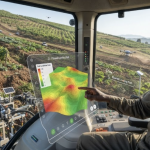
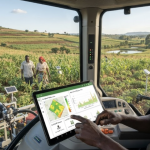
A more promising phase of agricultural innovation is taking shape across China and Vietnam. Drones are joining service networks, satellite imagery is informing crop decisions, and biological products are moving into broader programs for integrated pest management (IPM), soil health and efficient input use. The opportunity is no longer simply to digitize farming. It is to use technology to make biological agriculture more dependable in the field.
FIVE LINKS BETWEEN PRECISION AGRICULTURE AND BIOAG
A connected pathway from field intelligence to repeatable biological performance
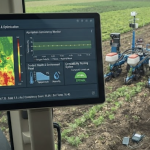
- 1. DIAGNOSE: AI IMAGERY SENSORS – Identify where stress, disease or pest pressure is emerging. TARGET: Treat the right place.
- 2. TIME: WEATHER PHENOLOGY AI – Match product biology with target vulnerability and field conditions. OPTIMIZE: Apply at the right time.
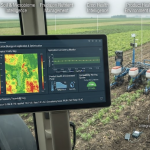
- 3. DELIVER: DRONES VARIABLE RATE – Improve placement, dose coverage and operational repeatability. CONTROL: Deliver the right way.
- 4. VERIFY: MAPS REMOTE SENSING – Document performance, compare outcomes and observe crop response. PROVE: Show what changed.
- 5. LEARN & SCALE: PLATFORMS TELEMATICS DATA – Refine protocols, set new economics and support wider adoption. SCALE: Turn evidence into adoption.
HOW PRECISION CAN MAKE BIOLOGICALS MORE WORKABLE
For biological agriculture (BioAg), the convergence matters. Formulation, viability, timing and environmental exposure can shape the performance of microbial and other biological products. Precision tools can reveal field conditions, improve application control and document results.
China and Vietnam illuminate different paths. China brings manufacturing, engineering, digital infrastructure and innovation capacity. Vietnam reflects Southeast Asia’s fragmented production, diverse crops, uneven technology access and growing reliance on cooperatives and service providers.
Biological performance often turns on field conditions, treatment timing and application. Precision can make those details more visible and manageable. The opportunity lies in connecting diagnosis, application and measurement, then continuously improving the solution across successive seasons.
CHINA: BUILDING THE SCALE FOR SMARTER DELIVERY
China’s strategic direction is clear. Its smart agriculture agenda calls for stronger agricultural data systems, smart farms, artificial intelligence, intelligent machinery and more precise production. According to China’s Ministry of Agriculture and Rural Affairs, in 2025, agricultural scientific and technological progress exceeded 64%, crop cultivation and harvesting mechanization reached 76.7%, and the country’s agricultural drone fleet exceeded 300,000 units. Together, those drones recorded annual coverage of more than 460 million mu, equivalent to about 30.67 million hectares of cumulative operations, rather than unique farmland.
These figures do not imply uniformly digital farming. They show operational density: aircraft, machinery, platforms, pilots and advisers are increasingly available, so a biological product need not create its entire delivery system. That matters where timing, field access or labour constrain adoption.
Government guidance also emphasizes rapid soil testing, digital soil information, multidimensional monitoring and early warning, alongside AI, big data, low-altitude technology and green production. Together, these could link diagnosis, prescription, application and monitoring.
The biological market signal is also material, although definitions remain unsettled. In a written interview for BAW Digest, Leo Hui Li, Director of the Fertilizer Information Center at the China National Chemical Information Center (CNCIC), estimates China’s biostimulant market at approximately 10 billion renminbi (RMB) in 2026 and its biopesticide market at about RMB 28 billion in 2025, including roughly RMB 8 billion for microbial pesticides. The centre further estimates that biological inputs represented 12-15% market penetration in 2024 and could reach 20-25% by 2030. Their value is directional: investment and product development are moving toward biological functions while market definitions continue to evolve.
CNCIC’s assessment also suggests that adoption will not advance evenly. It places the penetration of combined biostimulant fertilizer or crop protection solutions above 60% in high-value crops and above 75% in protected cultivation, compared with about 25% in broadacre crops. The pattern is commercially plausible: growers are more willing to test biological programs where crop value, environmental control and advisory intensity make performance easier to manage. For China, these segments may therefore provide the proving ground from which broader adoption develops.
Yet the biological layer must be engineered. Spray volume, droplet size, agitation, nozzle choice, temperature, ultraviolet exposure and formulation stability may affect performance. Protocols for hydraulic sprayers may not transfer to ultra-low-volume drones. The test is whether a validated product-formulation-equipment-environment combination delivers consistent efficacy. Drone coverage is not biological product coverage. Trials must measure deposition, organism viability, efficacy, cost and repeat use, beyond speed and area treated.
WHO CONNECTS THE PIECES?
Infrastructure alone cannot turn promise into repeat use. Product development, registration, agronomy, application and farmer support must connect. Multinational companies (MNCs) can provide integration across seeds, crop protection, biologicals, data and decision support.
Syngenta offers a China-based illustration. Its Modern Agriculture Platform (MAP) reported 741 service centres in China and US$3.9 billion in sales for 2023. MAP is not a BioAg network; it shows how agronomy, products, digital tools and market links can be assembled at scale. Syngenta’s partnership with Planet adds frequent satellite imagery to Cropwise for crop monitoring and early detection of pest- and disease-related signals. In the five-link chain, these assets connect diagnosis with advice and delivery.
Bayer’s regional agreement with M2i adds pheromone-based crop protection, while Corteva Catalyst connects biologicals with technology platforms and decision science. Portfolios alone prove little. Local outcomes depend on registered products, crop-specific protocols, advisers and credible returns, especially in fragmented markets.
CNCIC describes a shift from volume-led growth to quality and innovation. Uneven product quality, evolving regulation, weak evidence of farm returns and the gap between trials and mainstream use remain constraints.
VIETNAM: SCALING THROUGH ACCESS, NOT OWNERSHIP ALONE
Vietnam’s fragmented farms and uneven technology adoption make access more important than ownership. A grower may never buy a drone, sensor or farm platform yet use all three through a cooperative, contractor, processor or supplier.
Bayer launched its Better Life Farming Alliance in Dak Lak province in 2024 to support smallholder coffee and durian growers. The company describes a network of model farms, advice and access to solutions. This is not evidence of BioAg adoption; it illustrates the service architecture needed to move beyond product channels.
In Vietnam, that layer is likely to span MNC programs, local advisers, cooperatives and technology providers.
If cooperatives and contractors form the delivery layer, local technology companies can strengthen the diagnostic layer. MimosaTEK, a Vietnamese Internet of Things (IoT) startup, developed sensors and cloud software used in a World Bank-supported pilot to manage water for alternate wetting and drying (AWD) in rice. Enfarm, another Vietnamese agricultural technology startup, is developing AI- and IoT-enabled soil-nutrition diagnostics. According to Partnering for Green Growth and the Global Goals 2030 (P4G), the Enfarm-CARE partnership has been awarded about US$340,000 in grant funding. Neither is presented as proof of BioAg adoption. Their contribution is more precise: they make field conditions visible, improving the decisions into which fertilizers, biostimulants or microbial products may later be integrated.
Shared services concentrate expertise, spread equipment costs across farms and generate consistent application records. They spare individual growers from absorbing product risk, equipment cost and learning cost at once.
A 2026 study of 940 rice-farming households in the Mekong Delta, published in Research on World Agricultural Economy, found that unmanned aerial vehicles (UAVs) were used mainly for seeding, fertilization and pesticide spraying, with farm size influencing adoption nonlinearly. This does not establish an effect on biological product use; it shows that access depends on service availability and farm economics. Programs of the Food and Agriculture Organization of the United Nations (FAO) in Vietnam similarly combine field trials with training for cooperatives, service providers and public agencies.
Vietnam’s one-million-hectare high-quality, low-emission rice program in the Mekong Delta puts input efficiency alongside water management, mechanization, training, measurement and market links. Such a system may allow biological solutions to be tested and adopted more reliably.
The approach builds on earlier experience. The World Bank reports that the Viet Nam Sustainable Agriculture Transformation Project supported low-emission rice practices across approximately 185,000 hectares; participating farmers reduced inputs by up to 50%, increased earnings by about 30% on average, and the program cut an estimated 1.5 million tonnes of carbon dioxide equivalent (CO2e) emissions annually. These are system-level outcomes, not biological product effects. But they demonstrate the institutional conditions that biologicals need: organized farmer groups, protocols, training, measurement and incentives to continue.
FIELD CASE: VALUE COMES FROM THE SYSTEM
In a case published by FAO in 2025, a five-hectare site in Thanh Quoi commune, Can Tho, combined integrated pest management, pheromone traps, biopesticides, natural-enemy conservation, rice-duck cultivation, AWD, organic and biological fertilizers, and drone spraying of biopesticides.
Farmers reported 30% higher net profit per hectare, more than 50% less seed, 55% fewer spraying operations and 29% lower material costs. FAO attributes the result to the combined production model, including healthier crops, fewer field operations, lower expenditure and improved pest management.
Evidence note: Neither drones nor biopesticides alone can be credited with the 30% profit increase. The case shows how biological practices and technology may create value within a coherent agronomic system, backed by training and visible results that neighboring farmers can assess.
WHAT WILL TURN PROGRESS INTO SCALE?
The next phase will be less about adding another tool to the market and more about making the pieces work together reliably. The technologies exist, biological portfolios are expanding and field interest is growing. What remains harder, and ultimately more valuable, is building a model that farmers and service providers can use with confidence, season after season. Four priorities deserve attention.
- Validate biological-specific application protocols for compatibility, organism viability, deposition, water quality, equipment and crop-specific timing.
- Measure efficacy, input and labour use, cost per hectare, reliability, relevant environmental outcomes and farmers’ willingness to repeat not just hectares and yield.
- Build service models through cooperatives, drone contractors, agronomists and processors that can connect technology with biological products.
- Match claims to evidence: platform capability is not adoption; a demonstration is not scale; a bundled outcome cannot be assigned to one component without a suitable comparison.
THE DESTINATION: REPEATABLE FARM VALUE
The evidence points to a broader conclusion: smart biological agriculture will not emerge from one universal model. Large, technology intensive agricultural economies may progress through machinery, data, manufacturing and corporate research and development (R&D). Southeast Asian and other tropical smallholder systems may advance through cooperatives, contractors and shared services. Their starting points differ, but the destination can be the same.
China shows the reach of precision infrastructure. Vietnam shows why local agronomy, learning and service delivery determine whether capability becomes practice. Companies that combine product quality, validated application, transparent field comparisons and local partners are best placed to turn promise into routine use.
The shared goal is neither digital agriculture for its own sake nor biological agriculture as a label. It is practical farm value: knowing what to apply, where and when to apply it, whether it was delivered correctly, what changed and whether the economics justify doing it again. When technology helps answer those questions, different agricultural systems, large or small, highly mechanized or service led can move toward the same outcome: BioAg as a trusted and scalable part of everyday crop management.
BioAg World Digest | Summer 2026

Leave a Reply