
Scientific Presentation Spotlight
BTU BIOTECH COMPANY PRESENTS SCLEROCID Research at EGU General Assembly 2026
Novel Multi-Strain Microbial Consortium Suppresses White Mold and Blocks Sclerotia Formation
What were the key findings when the BTU BIOTECH COMPANY PRESENTS SCLEROCID at the EGU General Assembly?
Ukrainian biotech leader BTU unveiled research on Sclerocid®, a synergistic microbial biofungicide designed to combat Sclerotinia sclerotiorum (white mold). The study demonstrates that this multi-strain consortium effectively suppresses the pathogen and, crucially, blocks the formation of new sclerotia, which are known to persist in soil for up to a decade.
Which microorganisms make up the Sclerocid® consortium and how do they work?
The biofungicide combines four key beneficial microorganisms: Paraphaeosphaeria minitans, Trichoderma harzianum, Bacillus subtilis, and Bacillus licheniformis. These strains act synergistically to target the source of the disease in the soil, outperforming the efficacy of any single strain used in isolation while simultaneously controlling other accompanying soil-borne pathogens.
Why is this presentation significant for the international scientific community?
Presented in Vienna at Europe’s largest geoscience conference, the BTU BIOTECH COMPANY PRESENTS SCLEROCID research highlights the global relevance of Ukrainian biotechnology. With seven years of commercial field experience, Sclerocid® serves as a proven nature-based solution that supports integrated disease-management systems and sustainable land use on a global scale.
Read Whole News Here
VIENNA, AUSTRIA — May 12, 2026 — Ukrainian biotechnology company BTU presented research on Sclerocid®, a multi-strain microbial biofungicide for the control of white mold (Sclerotinia sclerotiorum), at the EGU General Assembly 2026, Europe’s largest geoscience and Earth-sciences conference, held in Vienna and online from 3–8 May 2026.
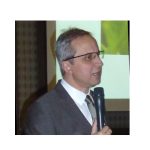
The findings were presented by Yaroslava Bukhonska, plant physiologist at BTU. Sclerocid® combines a consortium of beneficial microorganisms, Paraphaeosphaeria minitans, Trichoderma harzianum, Bacillus subtilis and Bacillus licheniformis, selected to act synergistically. According to the research, the consortium suppresses the pathogen, blocks the formation of new sclerotia and helps control accompanying soil-borne pathogens, performing more effectively than any single strain used in isolation.
“White mold remains one of the most serious challenges for crop production: the pathogen can infect up to 500 plant species, and its sclerotia can persist in the soil for up to ten years,” said Yaroslava Bukhonska. “It is therefore essential to address not only the visible symptoms but the source of the disease in the soil itself.”
Beyond laboratory results, Sclerocid® has seven years of commercial field experience on large agricultural areas, where it is used to manage sclerotinia rot and related soil-borne diseases.
“For BTU, the EGU General Assembly 2026 is also confirmation that Ukrainian biotechnology and Ukrainian science are part of the global professional dialogue on the future of soils, agriculture and nature-based solutions,” said Vladyslav Bolokhovskyi, CEO of BTU.
About BTU:
BTU is a leading Ukrainian biotechnology company focused on developing and producing microbiological products for sustainable agriculture. With over 25 years of innovation and field-proven solutions, BTU serves farmers in more than 25 countries. Learn more at www.btu-center.com.
About EGU General Assembly 2026:
The EGU General Assembly is an annual international conference and one of Europe’s leading scientific venues for research on Earth, soil, climate and nature-based solutions. The 2026 edition brought together approximately 20,000 researchers from around the world across 22 scientific divisions.
Global Industry Context
BTU’s presentation at EGU follows a trend of biological innovation scaling across the sector. For instance, BASF Agricultural Solutions recently commissioned a major fermentation BioHub, while Verdesian Life Sciences continues to secure high-level certifications for its nutrient-use efficiency technologies.
BTU – Leading Ukrainian Biotechnology
EGU 2026 Presentation | Vienna, Austria | btu-center.com


Leave a Reply